
Quartz vs. Granite: Which is Best for a UK Kitchen?
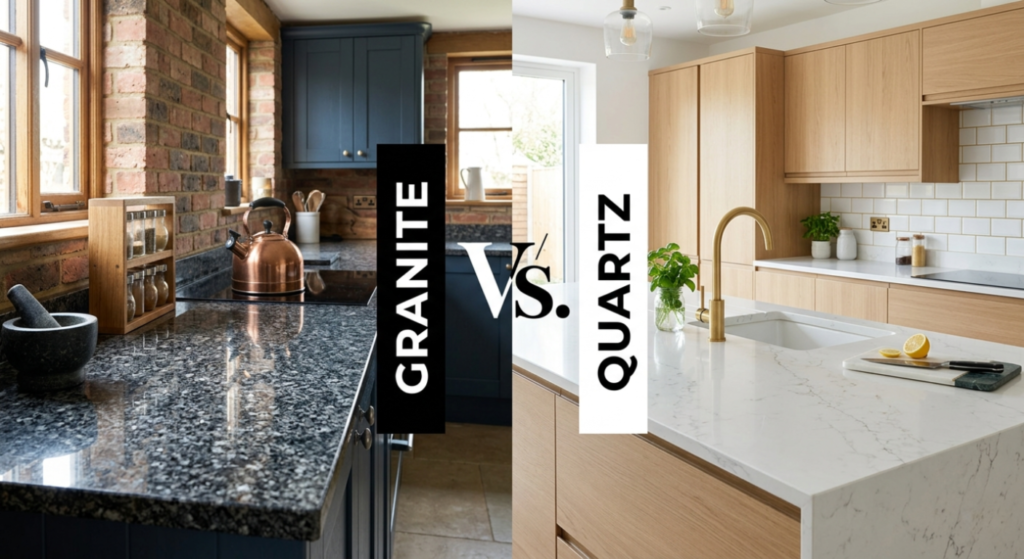
Choosing a new kitchen worktop is one of the biggest decisions you will make during a kitchen renovation. It needs to look beautiful, but it also has to withstand daily cooking, spills, and hot pans.
Two of the most popular premium choices on the market today are Granite and Quartz. While they can look similar at a glance, they are actually completely different materials.
In this guide, we will break down the differences between Granite and Quartz so you can choose the perfect fit for your home.
What is the Difference?
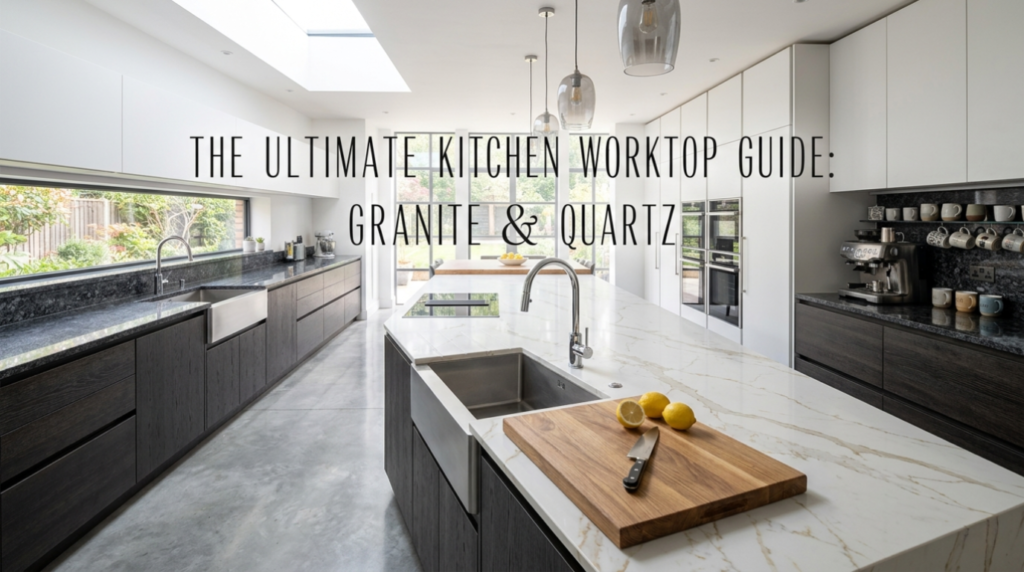
The main difference comes down to how these materials are made:
-
- Granite is 100% natural stone. It is quarried directly from the earth in large blocks, sliced into slabs, and polished. No two slabs of granite are exactly alike.
-
- Quartz is an engineered stone. It is man-made in a factory by mixing roughly 90–95% crushed natural quartz minerals with resins, polymers, and pigments.
2. Appearance and Style
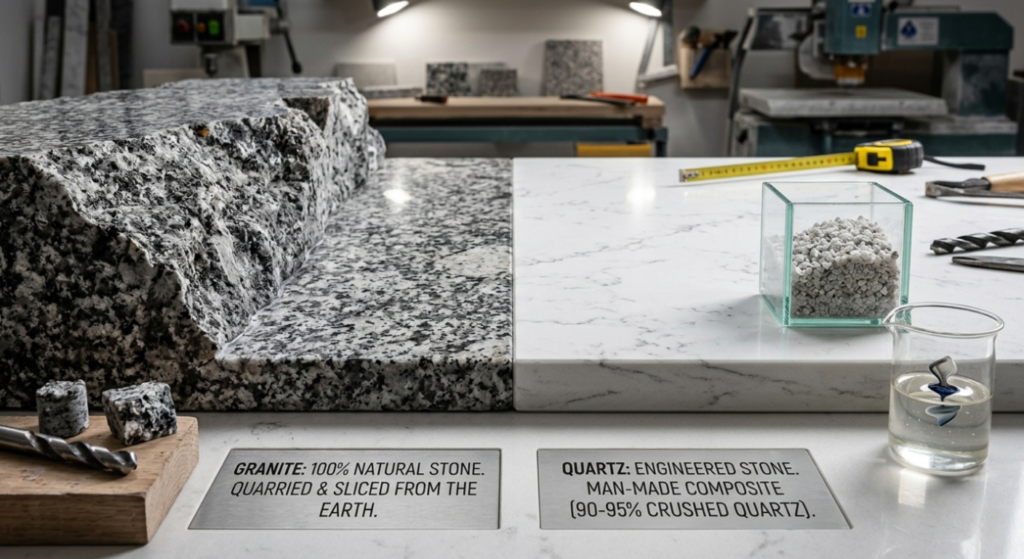
Because Granite is completely natural, it features unique, unpredictable patterns, veins, and color variations. If you want a one-of-a-kind worktop that looks like a piece of art, granite is a stunning choice.
Because Quartz is engineered, the patterns are controlled. This means you can get a very consistent look across your whole kitchen. Quartz is also famous for its ability to mimic high-end marble without the delicate upkeep, and it comes in solid, modern colors like bright white or concrete grey.
3. Durability and Maintenance
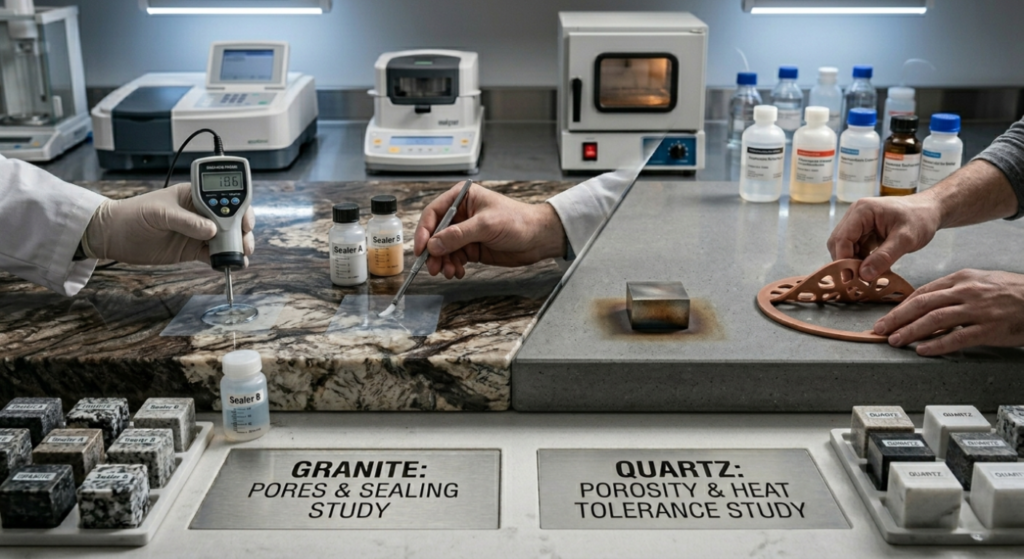
Both materials are incredibly tough, but they handle maintenance differently:
Granite Maintenance
- Porous: Granite is naturally porous, meaning it can absorb liquids if left unsealed.
- Sealing: It requires sealing upon installation, and you will need to re-seal it every 1 to 2 years to prevent stains and bacteria growth.
- Heat Resistance: Highly heat-resistant. You can place a hot pan directly on it without worrying.
Quartz Maintenance
-
- Non-Porous: Quartz is entirely non-porous thanks to the resins used to make it. It will never absorb liquids or stain.
-
- No Sealing Required: It is virtually maintenance-free. Just wipe it down with soap and water.
-
- Heat Resistance: Less heat-resistant than granite. The resins inside can burn or discolor if you place a piping hot pan directly onto the surface. Always use a trivet!
Summary Comparison Table
| Feature | Granite | Quartz |
| Composition | 100% Natural Stone | 90-95% Crushed Stone + Resin |
| Appearance | Unique, natural variations | Consistent, modern designs |
| Stain Resistance | Needs sealing to resist stains | Naturally highly stain-resistant |
| Maintenance | Requires re-sealing periodically | Zero maintenance required |
| Heat Resistance | Excellent | Moderate (needs a trivet) |
The Verdict: Which Should You Choose?
Choose Granite if: You love the timeless beauty of natural stone, want a unique pattern that no one else has, and don’t mind doing a little bit of occasional maintenance.
Choose Quartz if: You want a sleek, modern look, zero maintenance, and a surface that is highly resistant to spills and stains from busy family life.